
In most standard emergency scenarios — a fridge start relay failure, a washing machine pump failure, a dryer thermal fuse replacement, a dishwasher door latch fix — the repair can be completed in a single visit when the technician is well-prepared and the part is available. This is why providing accurate model information when you call matters so much.
After the repair, ask the technician to walk you through what failed and why. Understanding whether the failure was a maintenance issue, a wear-and-tear part at end of life, or a random component failure gives you useful information for future maintenance decisions and helps you decide whether investing in further preventive care makes sense for that particular appliance.
Most closets in Mississauga homes were built for a different era of living. A single hanging rod and one fixed shelf might have been adequate decades ago, but for today's households — where wardrobes are larger, storage needs are more varied, and home organization has become a genuine priority — that original setup falls short in almost every case. Custom closet solutions Mississauga homeowners are investing in right now are less about luxury and more about making daily life easier. When a closet is designed around what you actually own and how you actually use the space, it functions completely differently from one that was built to a builder's generic standard.
Professional Handyman Services Oakville | Book Today
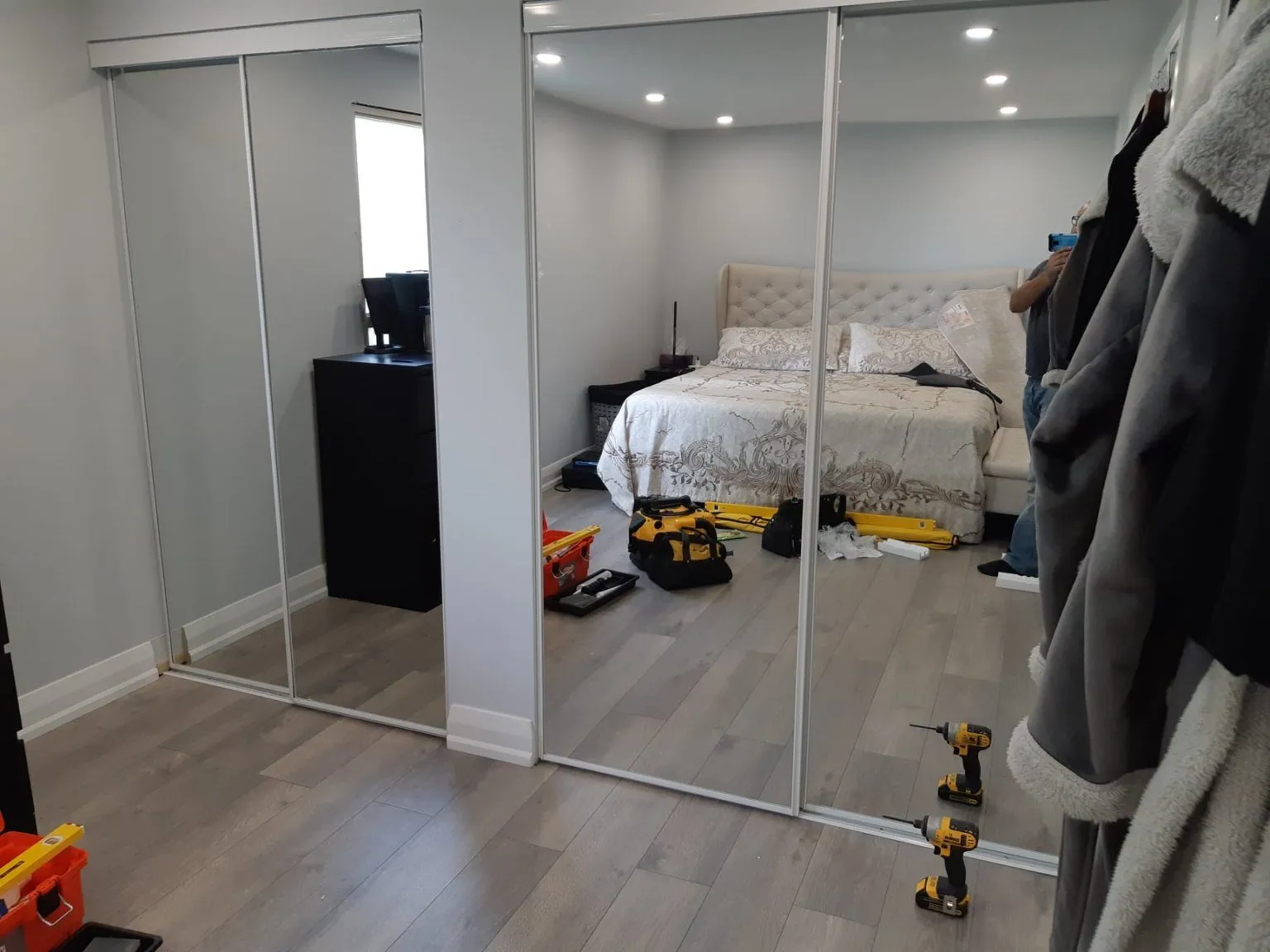
The difference shows up immediately. A well-organized master bedroom closet where everything has a designated place — hanging sections at the right height for different garment lengths, shelving spaced for folded items, drawers for accessories, and a clear line of sight to everything inside — saves time every single morning. The opposite experience, where items are piled, doubled up on a single rod, or lost on a deep shelf that nothing reaches properly, is something most Mississauga homeowners recognize from their own homes. It is not a problem of having too much; it is a problem of having a closet that was not designed to hold what it needs to hold.
Handyman Oakville Ontario installs closet systems across Mississauga and the surrounding region, working with modular and custom-configured shelving, hanging rod systems, drawer units, and integrated components to build out closets that actually work for the household. Whether it is a master bedroom walk-in, a reach-in bedroom closet, a linen closet that has become unmanageable, or a mudroom that needs proper organization infrastructure, the approach is the same: measure the space carefully, understand what it needs to hold, and install a system that fits both.
Storage is one of those home features that only gets noticed when it is not working. When a closet is well-organized and easy to use, it becomes invisible — it just works. When it is not, it becomes a source of daily frustration, clutter overflow into the bedroom, and the kind of low-level stress that accumulates without most people consciously identifying the source.
In Mississauga condos and apartments, where total square footage is often limited and every inch of storage counts, the organization of each closet has a disproportionate impact on how livable the space feels. A condo with two well-organized closets feels more spacious and functional than one with the same floor plan but poorly utilized storage. This is a practical reality that condo owners and renters experience directly.
Master bedroom closets in detached homes and townhomes present a different set of challenges. These closets often have more raw space than a condo closet, but that space is rarely used efficiently in its original configuration. A standard walk-in with perimeter shelving at one height and a center hanging rod wastes the upper and lower portions of the space entirely — prime storage real estate that a properly configured system would capture.
Children's bedroom closets need to accommodate changing needs over time. A closet system that serves a six-year-old well — with lower hanging rods, accessible shelving, and visible organization — needs to be adjustable as the child grows and their wardrobe evolves. Modular systems with adjustable shelving and moveable components are the practical choice for these spaces precisely because they can be reconfigured without starting from scratch.
Entryway and mudroom storage is another area where a thoughtfully installed system changes daily habits. Hooks at appropriate heights, shelving for bags and shoes, a bench over a lower cabinet section, and a hanging rod for coats create a functional entry zone that keeps the rest of the home from absorbing the clutter that would otherwise spread from the door inward. In Mississauga households with children and active lifestyles, this kind of organized entry is not a nice-to-have — it is a practical necessity.
The connection between organized storage and property value is also worth considering. Buyers and tenants both respond to well-organized, finished closet systems. A master bedroom walk-in with proper shelving and hanging configurations reads as a premium feature. A basic rod-and-shelf original closet reads as deferred improvement. This matters when a property is being prepared for sale or for a new tenant.
The single-rod-and-shelf configuration is the most common closet setup in Mississauga homes built before 2010. It works reasonably well for a small wardrobe but fails quickly when a household's storage needs grow. The result is garments doubled up on the same rod, folded items piled on the single shelf until they topple, and everything else stored on the floor because there is nowhere else to put it.
In older homes near Port Credit and Lakeview, closets are sometimes narrower and shallower than in newer construction — built to standards that did not anticipate the depth of modern garment bags or the width of contemporary winter coats. Making these closets work requires creative configuration rather than simply installing a standard kit, which is where professional measurement and planning matters.
Shelving that was installed without anchoring into wall studs is a persistent problem in closets that have been partially updated by previous owners. A shelf loaded with folded clothes, shoes, or linens can pull away from the wall if it was anchored only into drywall without reaching the studs behind it. A shelf failure in a closet is disruptive and often damages the wall surface in a way that requires patching before reinstallation.
Broken closet door hardware is another common issue. Bi-fold closet doors with worn pivot pins and floor guides, sliding doors that have come off their tracks, or mirror-panel wardrobe doors with failed rollers are all problems that can make an otherwise functional closet frustrating to use. In many cases, the door system and the closet organization system need to be addressed together for the space to work properly.
Humidity and poor ventilation in closets — particularly in basement or exterior-wall closets — can cause shelving materials to warp over time. Wire shelving is more resistant to this than particleboard-based systems, but neither is entirely immune if the underlying moisture issue is not addressed. When closet shelving shows signs of sagging or warping, it is worth evaluating the ventilation condition of the space before installing a replacement system.
Closet space that has been converted to other uses — a small closet that became a makeshift home office, a reach-in that was modified to hold a printer and cables — sometimes needs to be reconverted back to functional clothing storage when the household's needs change. This requires removing whatever was installed, assessing the wall condition, and starting fresh with a properly planned and anchored system.
The planning phase of a closet installation is where most of the value is created. A well-planned system that accounts for the actual contents of the closet, the height and reach of the people using it, and the specific dimensions of the space will outperform a generic off-the-shelf kit in a space it was not designed for — even if the components are similar in quality.
The first step is measuring the closet accurately. Width, depth, and height all matter, and in older homes these dimensions are often not perfectly square. A closet that is slightly narrower at one end than the other, or that has a ceiling that slopes near the back wall, requires components cut to fit rather than installed at standard dimensions. Taking measurements in multiple locations, not just at the opening, is standard practice.
The next step is understanding what the closet needs to hold. Hanging space for full-length garments like dresses and coats requires a different allocation than space for shirts and jackets, which can be doubled up with a second hanging rod below to make better use of the vertical space. Folded clothing needs shelving at specific depths — typically 12 to 16 inches — that allows items to be stacked and retrieved without disturbing the entire pile.
Drawers in a closet system serve a different function than shelving. Accessories, undergarments, folded knitwear, and seasonal items that do not hang well are natural drawer candidates. Drawer units in a closet system take up floor space or integrate into a tower configuration, and their placement affects how the surrounding hanging and shelving areas are laid out. Getting this balance right requires thinking about the system as a whole rather than component by component.
Lighting is often overlooked in closet planning but makes a meaningful practical difference. A walk-in closet with a single overhead fixture in the center leaves the corners in shadow. Adding LED strip lighting on the underside of upper shelving — a quick installation on an existing circuit — dramatically improves visibility and makes the closet easier to use. This is the kind of small addition that most homeowners wish they had included from the start.
Material selection for closet components involves trade-offs between durability, cost, and appearance. Wire shelving is durable, inexpensive, allows air circulation, and is easy to install and adjust. Melamine-coated particleboard panels give a cleaner, furniture-like appearance but are heavier, less adjustable after installation, and more susceptible to moisture damage. Solid wood or MDF components are the most premium option and are typically used in high-end custom installations. Most practical closet solutions for Mississauga homeowners fall in the wire or melamine category, depending on the space and budget.
Basic wire shelving kits — the kind sold at hardware stores in standard widths — are a legitimate DIY option for simple reach-in closets where the dimensions are straightforward and the storage needs are not complex. The key requirement is finding the studs and anchoring into them rather than into drywall, using a stud finder and the appropriate screw length to reach framing. A shelf that is only anchored into drywall will fail under any meaningful load.
Where DIY closet installation typically runs into trouble is in anything beyond a standard configuration. A walk-in closet with multiple zones — hanging, shelving, drawers, and a center island — requires precise planning, accurate cuts, and careful sequencing of installation steps. Getting a component installed out of order in a modular system can mean disassembling a section to correct it, which turns a two-hour project into a full day.
Cutting and fitting components to non-standard dimensions requires the right tools and the confidence to use them. A miter saw or circular saw with a fine-tooth blade, the ability to make clean cuts without chipping the melamine surface, and the knowledge to account for the saw's kerf in measurements are skills that affect the finished result visibly. Rough or imprecise cuts in a closet system are apparent every time the door opens.
Anchoring into wall studs in a closet is more involved than in open rooms because the studs are harder to locate and confirm. In a standard 24-inch-wide reach-in closet, there may be only one stud available within the closet itself, requiring the use of well-rated wall anchors for the remaining mounting points. Knowing which anchors are appropriate for the load and the wall type — and installing them correctly — is where experience makes a meaningful difference in the durability of the finished system.

For homeowners who have purchased a modular closet system and have the components ready but are not confident in the installation, bringing in professional help for the installation phase only is a practical middle ground. The planning and purchasing decisions are already made; the installation is the part that benefits from experience, precision, and the right tools. This is a common and sensible approach.
If the space requires any drywall repair — from previous shelving that was removed, holes from old hardware, or wall damage from a failed installation — that work should be completed and properly dried before new components are installed. Installing shelving against freshly patched drywall that has not fully cured is a common mistake that leads to cosmetic problems where the patch telegraphs through paint behind the installed components.
Condos in Mississauga's City Centre and Cooksville areas typically have standard-size reach-in closets and smaller walk-in configurations compared to detached homes. Every cubic foot of closet space in a condo unit matters. A closet system that doubles the usable hanging capacity by adding a second rod, captures the full height of the closet with upper shelving, and includes a drawer tower for accessories turns a standard builder closet into one that can comfortably accommodate a full wardrobe without overflow.
For condo owners preparing a unit for resale or rental, a properly installed closet system in the master bedroom is a detail that photographs well and presents strongly during showings. It communicates that the unit has been maintained and thoughtfully improved — a meaningful signal to buyers and prospective tenants who are evaluating multiple properties.
Townhomes throughout the Mississauga area — from developments near Winston Churchill Boulevard to communities closer to the Oakville border — often have generous closet footprints in the master bedroom but original configurations that do not use the space well. A full-wall shelving and hanging system in a townhome walk-in closet is typically a half-day installation that transforms one of the most frequently used spaces in the home.
Landlords managing rental properties benefit from closet systems in a different way. A well-configured closet reduces the likelihood of tenants improvising storage solutions — freestanding shelving that damages walls, over-door organizers that stress door hardware, and stacked boxes that create fall hazards. A properly installed system that meets the unit's storage needs is an investment in the condition of the property over time.
For property managers handling multiple units in a building or development, scheduling closet installations across several units during a vacancy period is an efficient approach. The work is predictable in scope and timing, and the result adds measurable value to each unit without requiring significant renovation. Handyman Oakville Ontario can work through multiple units in a coordinated visit to make this process as efficient as possible.
Home offices in Mississauga homes frequently occupy former bedroom closets or spare room closets that were partially converted. When these spaces transition back to bedroom use — or when the home office needs proper organization in its own right — a modular closet or shelving system designed for the actual use is far more effective than the improvised arrangements that accumulate in these spaces over time.
A stud finder is the most important tool at the start of any closet installation. Locating the studs behind the drywall and marking their positions accurately determines where the primary anchoring points for the system will be. In a standard closet, studs are typically on 16-inch centers, but older construction in Mississauga homes sometimes uses 24-inch spacing, which changes where anchor points are available.
A drill with multiple bit sizes is the workhorse tool for closet installation. Pilot holes for screws into studs, larger holes for wall anchors in drywall, and specific hole sizes for the mounting hardware of different component types all require the right bit. Driving screws without pilot holes in tight closet spaces, or into older drywall that is more brittle than modern board, risks splitting the material and losing the anchor point.
A level is used constantly during installation — not just for the finished shelving but for the mounting standards or tracks that the components attach to. A track that is installed even slightly off-level will make every shelf, rod, and component attached to it visibly uneven. Checking level at multiple points along the track before final fastening is the kind of attention to detail that determines whether a closet system looks professionally installed or approximately installed.
A measuring tape and pencil are used throughout the planning and installation process. In closets, where space is tight and every inch matters, measurements need to be precise — not estimated. The gap between a shelf and the wall, the height of a hanging section, and the spacing between shelving levels all affect whether the system actually accommodates what it is designed to hold.

For melamine or wood-based component systems, a circular saw or miter saw with a fine-tooth blade is needed to cut panels to the correct dimensions. Most modular systems come in standard lengths that may need to be trimmed for the specific closet dimensions. Clean cuts on melamine require a blade designed for this material and a cutting technique that minimizes chip-out on the finished face.
Wall anchors in appropriate sizes and ratings are needed wherever mounting points fall on drywall rather than studs. Plastic expansion anchors, toggle bolts, and snap-toggle anchors each have different load ratings and installation requirements. Using the correct anchor for the expected load — heavier for shelves that will hold linens or shoes, lighter for upper-level components that hold lighter garments — is a detail that affects the long-term performance of the installation.
The most natural time to upgrade a closet system is when moving into a new home. During the period between possession and full occupancy, when the closet space is empty and accessible, is the ideal window for a closet installation. Scheduling the work before unpacking means the system is in place and ready to use from the first day of occupancy, rather than being retrofitted around items that are already stored inside.
Seasonal transitions — particularly the shift from winter to spring or summer to fall — create natural moments when closet contents are being sorted, packed away, or brought out. This reorganization process often highlights how well or poorly the existing closet configuration is working. If each seasonal changeover involves an hour of reorganizing an inadequate space, that is a clear signal that the space itself needs to change, not just the items in it.
Life changes are a frequent trigger for closet upgrades. A new partner moving in, a growing child who needs more organized space, a home office conversion that changes how storage is distributed across the home, or a household downsizing from a detached home to a Mississauga condo — all of these situations create a new set of storage requirements that the existing closet configuration may not meet.
Rental property preparation between tenants is a practical window for closet installation. The unit is empty, access is easy, and the improvement adds immediate value before the next tenant takes possession. A consistent closet system across all units in a portfolio also simplifies maintenance, since the hardware and components are familiar and replacement parts are readily available.
Explore our latest resources, guides, and helpful information.