Window Tinting Services in Cornelius, NC for Tesla
Cornelius electric vehicle drivers know how rapidly summer heat accumulates inside a Tesla cabin when parked near Lake Norman or commuting along Interstate 77. Securing specialized window tinting services in Cornelius, NC for Tesla provides electric vehicle owners with essential solar protection, glare reduction, and UV defense engineered specifically for Tesla's distinct glass surfaces. From the sweeping glass panoramic roof to frameless door windows, high-performance ceramic window film noticeably enhances everyday driving comfort.
Because electric vehicles draw energy from their high-voltage battery packs to power cabin climate control, unshaded vehicle cabins place high continuous demands on the air conditioning system. Applying advanced nano-ceramic window films establishes a high-efficiency thermal barrier that blocks solar infrared radiation before it enters the passenger compartment. This lower interior heat load allows the HVAC compressor to operate more efficiently, conserving valuable battery power and extending driving range along West Catawba Avenue.
Tinting a Tesla requires specialized technical mastery that standard tint shops often cannot deliver. The complex curvature of the Model 3 rear glass, frameless door window indexing, and sensitive electronic modules housed near the rear deck require experienced handling. This guide details the range-extending benefits of ceramic film, explains professional Tesla installation workflows, and reviews North Carolina legal standards for Cornelius drivers.
Table of Contents
Jump directly to any section of this comprehensive service guide.
Solar Heat Dynamics and Tesla Cabin Thermal Loads
Tesla's design emphasizes an open, glass-dominated cockpit that admits substantial solar heat into the vehicle cabin.
While factory roof glass features basic solar tinting, it still permits measurable radiant heat to penetrate the interior during prolonged exposure to intense southern sunshine.
The side windows and rear windshield arrive from the factory virtually untreated, allowing unfiltered infrared radiation and ultraviolet rays to heat the cabin interior rapidly.
Installing high-grade ceramic window tint establishes an advanced thermal barrier across all glass panels, dramatically lowering cabin heat gain and creating a more comfortable driving environment.
-1920w.webp)
Maximizing EV Battery Efficiency and Driving Range
The thermal efficiency of an electric vehicle directly influences its usable battery range and operational energy consumption.
In warm climates, cabin cooling represents one of the largest auxiliary power drains on a Tesla's high-voltage battery system.
- 1Infrared Heat Block: Ceramic window film blocks up to 85% to 90% of solar infrared radiation, keeping the cabin significantly cooler while driving or parked.
- 2Reduced Compressor Strain: The HVAC system cools the cabin faster and maintains set temperatures at lower fan speeds, reducing steady-state electrical consumption.
- 3Extended Driving Range: Lowering the power demand of the climate control system preserves stored battery energy for additional driving miles on Lake Norman highways.
- 4Less Cabin Overheat Activation: Ceramic tint reduces the frequency with which Tesla's automated Cabin Overheat Protection activates while parked in direct sunlight.
By minimizing solar heat gain, high-performance ceramic window films serve as a practical efficiency upgrade that enhances overall electric vehicle performance.
Owners enjoy improved cabin comfort, reduced energy usage, and extended range performance throughout warm Carolina summers.
Seamless Single-Sheet Model 3 Rear Glass Installation
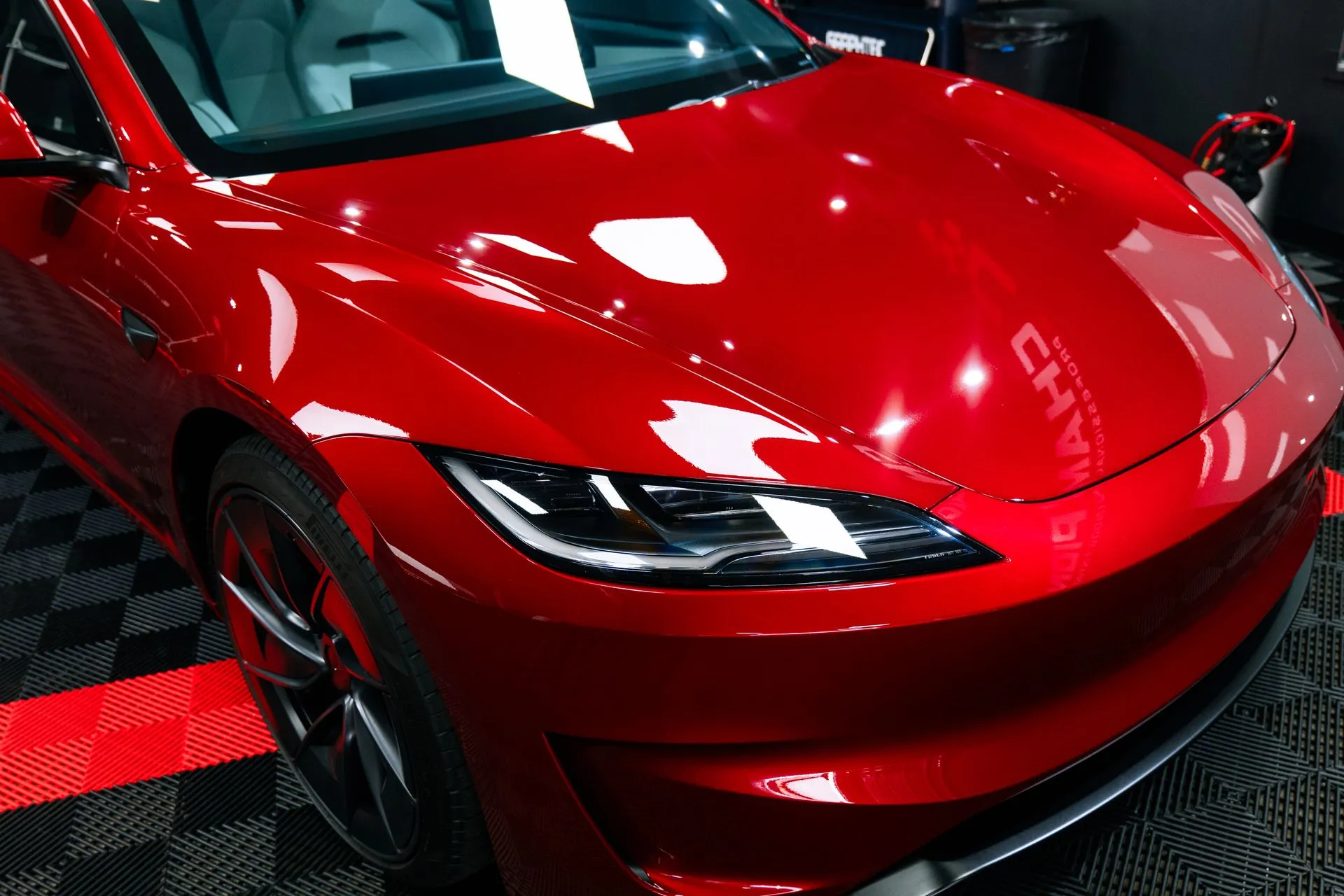
The expansive rear glass of the Tesla Model 3 is one of the most technically challenging window tint installations in the automotive industry.
The rear window stretches seamlessly from the trunk deck all the way overhead into the central roof crossmember, featuring complex compound curves.
Inexperienced tint installers often cut the film into two separate pieces, leaving an unsightly horizontal seam across the defroster lines that detracts from the car's minimalist aesthetics.
Specialized EV tint technicians use oversized 60-inch rolls of high-performance film to complete the entire rear glass in a single, seamless piece. This requires precise heat-shrinking techniques to shape the film to the glass contour without creasing or visual distortion.
-1920w.webp)
Safeguarding Onboard Electronics and Sensor Packages
Tesla vehicles feature dense arrays of sensitive electronics, computers, and wiring harnesses that demand careful protection during tint installation.
Beneath the rear window shelf and behind interior pillar trims lie audio amplifiers, body control modules, and wiring harnesses that must be shielded from moisture.
Professional installers utilize specialized absorbent rope soakers, microfiber dash covers, and protective barriers to prevent installation fluids from reaching electronic components.
Furthermore, high-performance ceramic window films contain no metallic particles, ensuring full compatibility with Tesla Autopilot cameras, GPS navigation, cellular data, and Bluetooth key fobs.
North Carolina Darkness Laws for Frameless Windows
Operating a tinted Tesla in Cornelius requires compliance with North Carolina window tint regulations outlined in NC General Statutes § 20-127.
North Carolina law requires a minimum of 32% Visible Light Transmission (VLT) on all passenger car windows, including front and rear side glass and the rear windshield.
Tesla vehicles feature frameless door windows that automatically index down when opening and index up into the rubber weatherstrip when closed.
Professional installers micro-edge the film and account for this indexing movement during cutting and curing, ensuring the film never catches, wrinkles, or peels along the upper window seals.
Protecting Vegan Leather and Minimalist Cabin Trims
Tesla interiors feature a clean, modern aesthetic centered around synthetic vegan leather upholstery and sleek dashboard surfaces.
While durable, synthetic polyurethane leather and dashboard trim can become uncomfortably hot and prone to UV-induced degradation after years of intense sun exposure.
Ceramic window films block up to 99% of damaging UVA and UVB rays, protecting seating surfaces, headrests, and steering wheels from solar wear.
In addition, lowering cabin heat helps prevent thermal stress on the central touchscreen display, protecting sensitive display electronics from overheating during sunny days.
Post-Installation Curing Protocols for Indexing Windows
Caring for newly tinted Tesla windows requires specific attention to curing schedules and the unique behavior of frameless glass doors.
Because Tesla frameless windows must index up and down during door operation, installers use specialized drying techniques to set the bottom edge adhesive securely before delivery.
Vehicle owners should avoid manually rolling windows all the way down for three to five days following installation to ensure complete adhesive bonding.
Any faint moisture hazing or minor water pockets visible during the first few days are standard physical characteristics of the curing process and will evaporate naturally as the film is exposed to warmth and sunlight.
Contact Us Today
Have questions or need emergency service? Reach out to our dedicated team anytime.
Champion Window Tinting
Fast, dependable support and honest pricing across our service area.
Frequently Asked Questions
Find clear, helpful answers to common questions regarding our process, pricing, equipment, and satisfaction guarantee.