How Dark Can Window Tint Legally Be in Texas?
In the sun-drenched state of Texas, automotive window tinting is not just a cosmetic upgrade—it is an essential defense against scorching heat, high ultraviolet radiation, and blinding highway glare. However, while darkening your vehicle's windows provides significant comfort and privacy benefits, operating a vehicle with excessively dark tint can lead to failed state vehicle inspections, costly traffic citations, and required removal.
Texas establishes clear, enforceable automotive window tint standards through the Texas Department of Public Safety (DPS) and the Texas Transportation Code (Title 7, Subtitle C, Chapter 547). These regulations define the minimum percentage of Visible Light Transmission (VLT) permitted on each window to ensure drivers maintain adequate roadway visibility while allowing law enforcement officers clear sightlines into the passenger cabin.
Understanding how Texas tint laws apply to your specific vehicle type is crucial before scheduling an installation. Many drivers find themselves asking: How Dark Can Window Tint Legally Be in Texas? Texas law distinguishes between passenger cars (sedans, coupes, hatchbacks) and multipurpose passenger vehicles (trucks, SUVs, passenger vans), establishing different darkness allowances for rear glass. Furthermore, specific guidelines govern front windshield tinting, film reflectivity, and mandatory compliance labeling.
At Alamo Auto Aesthetics, compliance is never left to guesswork. We test all automotive glass with calibrated digital tint meters prior to installation, factoring in factory glass pigmentation to ensure your completed vehicle strictly complies with Texas statutes. In this comprehensive guide, we explain Texas window tint laws in detail to help you stay cool, protected, and 100% street legal.
Table of Contents
Jump directly to any section of this comprehensive service guide.
Texas Window Tint Regulations: Visible Light Transmission (VLT) Explained
When understanding How Dark Can Window Tint Legally Be in Texas?, the cornerstone of state regulations is Visible Light Transmission (VLT). VLT refers to the percentage of visible light that passes through both the vehicle's glass and any applied window film combined. A lower VLT percentage indicates a darker film (e.g., 5% "limo tint" allows only 5% of light to pass), while a higher percentage indicates a lighter film (e.g., 70% VLT is nearly clear).
Under Texas Transportation Code Section 547.613, the driver and front passenger side windows on all motor vehicles must allow a minimum of 25% Visible Light Transmission. This means that the combined opacity of the factory glass and the applied film cannot block more than 75% of incoming visible light.
Key concepts in Texas VLT regulations:
- ✓Combined VLT Threshold: Texas law measures the combined light transmission of both the factory automotive glass and the applied aftermarket film.
- ✓Factory Glass Shading: Most factory automotive glass comes from the manufacturer with a subtle 70% to 80% VLT tint, which must be calculated when selecting film darkness.
- ✓25% VLT Rule for Front Windows: Both the driver's side and front passenger's side windows must measure at least 25% combined VLT to be street legal.
- ✓Measurement Tolerance: Texas inspection stations and law enforcement utilize calibrated digital tint meters with a ±3% tolerance band during compliance checks.
Selecting the right film shade requires professional metering. For instance, applying a 25% film onto factory glass that already meters at 75% will result in a net VLT of approximately 18.75%—rendering the vehicle illegal under Texas law. At Alamo Auto Aesthetics, we select custom film formulations (such as 30% or 35% VLT) that ensure the finished glass meters safely above the legal 25% threshold.
Legal Tint Darkness for Sedans, Coupes, Trucks, and SUVs
Texas law establishes different tint regulations depending on whether a vehicle is classified as a passenger car or a multipurpose passenger vehicle (MPV). Understanding your vehicle's legal classification ensures that you maximize privacy and heat rejection without violating state statutes.
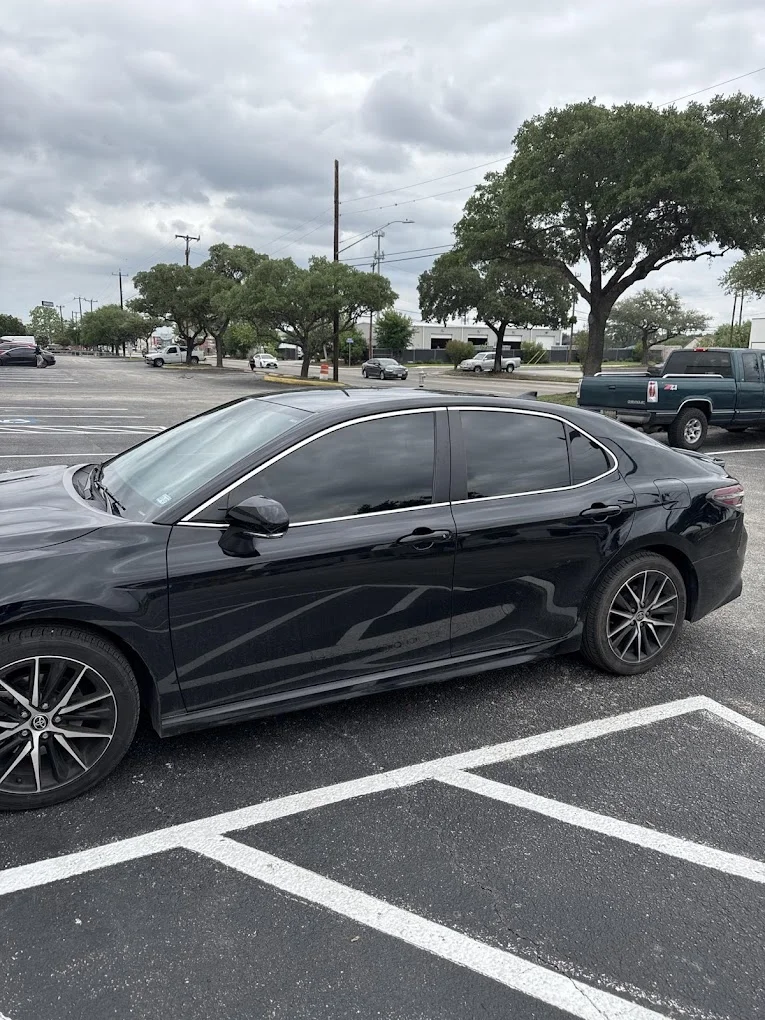
For passenger cars—including sedans, coupes, convertibles, and station wagons—the front side windows must meet the 25% VLT requirement. The rear side windows (behind the driver) and the rear windshield may be tinted to any level of darkness (including 5% limo tint), provided the vehicle is equipped with dual functional exterior side mirrors that provide a clear view behind the vehicle.
Summary of Texas tint darkness limits by vehicle type:
- ✓Sedans and Coupes: Front side windows must allow minimum 25% VLT; rear side windows and rear windshield have no darkness restrictions if dual side mirrors are present.
- ✓Trucks, SUVs, and Vans: Front side windows must allow minimum 25% VLT; all rear side windows and back glass can be tinted to any darkness level with dual side mirrors.
- ✓Factory Privacy Glass: SUVs and trucks often come with dark rear privacy glass; this glass blocks light but offers minimal heat rejection unless treated with ceramic film.
- ✓Dual Side Mirror Rule: If the rear windshield is tinted to any level, the vehicle must have both a driver-side and passenger-side exterior rearview mirror.
Because Texas allows unrestricted darkness on rear glass for all vehicle types equipped with dual side mirrors, owners can choose ultra-dark ceramic or carbon films for rear passengers and cargo areas, ensuring maximum privacy and passenger sun defense while keeping front windows fully legal.
Windshield Tinting Regulations: The AS-1 Line and Top 5 Inches
Front windshield regulations in Texas are strictly enforced to preserve clear forward vision for drivers. The Texas Department of Public Safety restricts aftermarket window tint on the front windshield to specific zones and allowable darkness levels.
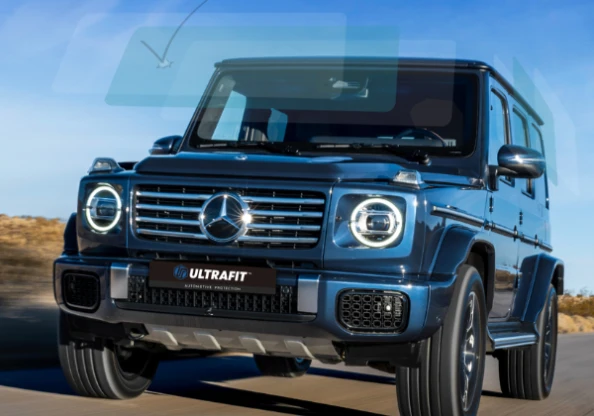
Under Texas statutes, non-reflective window tint is permitted along the top of the front windshield, provided it does not extend downward past the manufacturer's AS-1 line marked on the glass. If no AS-1 line is present, the tint strip may not extend more than 5 inches downward from the top edge of the windshield. This top strip, commonly known as a \"sun strip\" or \"eyebrow,\" can be tinted to any darkness level to block overhead sun glare.
Texas front windshield tinting guidelines:
- ✓AS-1 Line Placement: Tint is legally allowed above the factory AS-1 line stamped on the windshield glass.
- ✓5-Inch Measurement: If the glass lacks an AS-1 marking, tint cannot extend lower than 5 inches from the top glass edge.
- ✓Medical Exemptions: Texas DPS allows drivers with qualifying medical conditions (such as severe light sensitivity or porphyria) to apply full clear tint to the windshield with an official exemption permit.
- ✓Full Clear Ceramic Film: Many Texas drivers choose nearly clear 70% to 80% ceramic film for the entire windshield, which blocks up to 95% of infrared heat without darkening the glass.
For drivers seeking maximum thermal protection without altering the appearance of their windshield, clear ceramic films provide an exceptional solution. These advanced films reject massive amounts of solar energy while remaining virtually invisible, preserving factory light transmission and road clarity.
Reflectivity, Tint Colors, and Dual Side Mirror Requirements
In addition to Visible Light Transmission limits, Texas statutes regulate the reflective properties and colors of automotive window films. Highly reflective or mirrored window films can create dangerous glare for oncoming drivers, especially under bright Texas sunlight.
Texas Transportation Code mandates that window tint applied to side windows cannot have a luminous reflectance exceeding 25%. This means that reflective, chrome, or mirror-finish films that bounce sunlight into surrounding traffic are strictly prohibited on passenger vehicles.
Texas regulations regarding tint reflectivity, colors, and labeling:
- ✓Luminous Reflectance Limit: Window film cannot have more than 25% solar reflectance on any side window.
- ✓Prohibited Film Colors: Texas law strictly prohibits red, blue, and amber colored window films on any vehicle glass.
- ✓Official DPS Compliance Decal: Texas law requires a manufacturer compliance label affixed between the film and glass on the driver's side window.
- ✓Side Mirror Mandate: Any vehicle with rear window tint must have exterior side mirrors on both the driver and passenger sides.
The DPS compliance label is an essential element of Texas law. This small, certified decal confirms that the installed film complies with Texas VLT and reflectance standards, serving as immediate proof of compliance during annual vehicle safety inspections and law enforcement interactions.
Our Certified Texas DPS Compliant Window Tint Installation Process
At Alamo Auto Aesthetics, we take legal compliance and installation quality seriously. Our certified technicians follow an exacting multi-phase workflow designed to deliver flawless aesthetics, maximum heat rejection, and 100% adherence to Texas DPS regulations.
Our Texas-compliant window tint installation workflow includes:
- 1Digital Tint Meter Testing: We test the vehicle's bare factory glass using calibrated digital light meters to determine baseline light transmission prior to cutting film.
- 2Legal VLT Calculation and Film Selection: We calculate the exact film opacity needed to ensure the finished glass meters safely above the 25% legal threshold, avoiding accidental violations.
- 3Computerized Pattern Plotting: Using automated plotters and digital manufacturer templates, we precision-cut the film to exact glass dimensions, completely avoiding hand-cutting blades on your vehicle.
- 4Clean-Room Application and Compliance Labeling: Technicians install the film in our dust-filtered studio, affix the official Texas DPS compliance decal between the film and glass on the driver's window, and extract mounting moisture for optical clarity.
Following installation, our team performs a final meter check and provides detailed curing guidelines. This disciplined process guarantees that your vehicle looks stunning, stays cool, and passes Texas state inspections with ease.
Why Choose Alamo Auto Aesthetics for Texas Legal Window Tinting
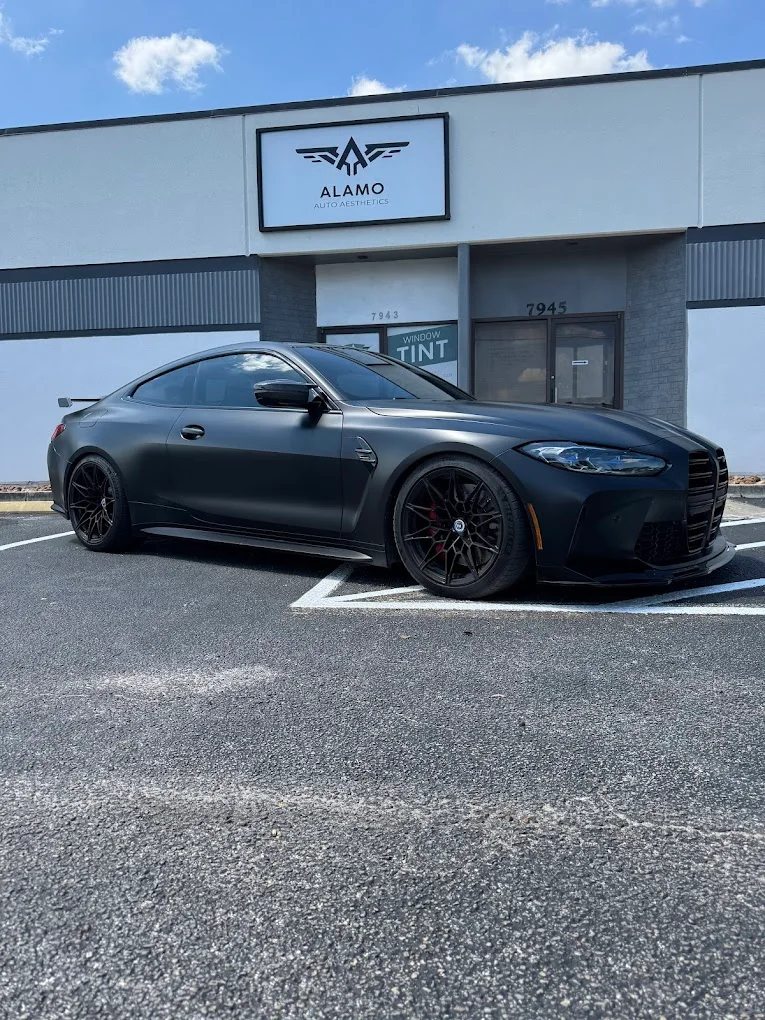
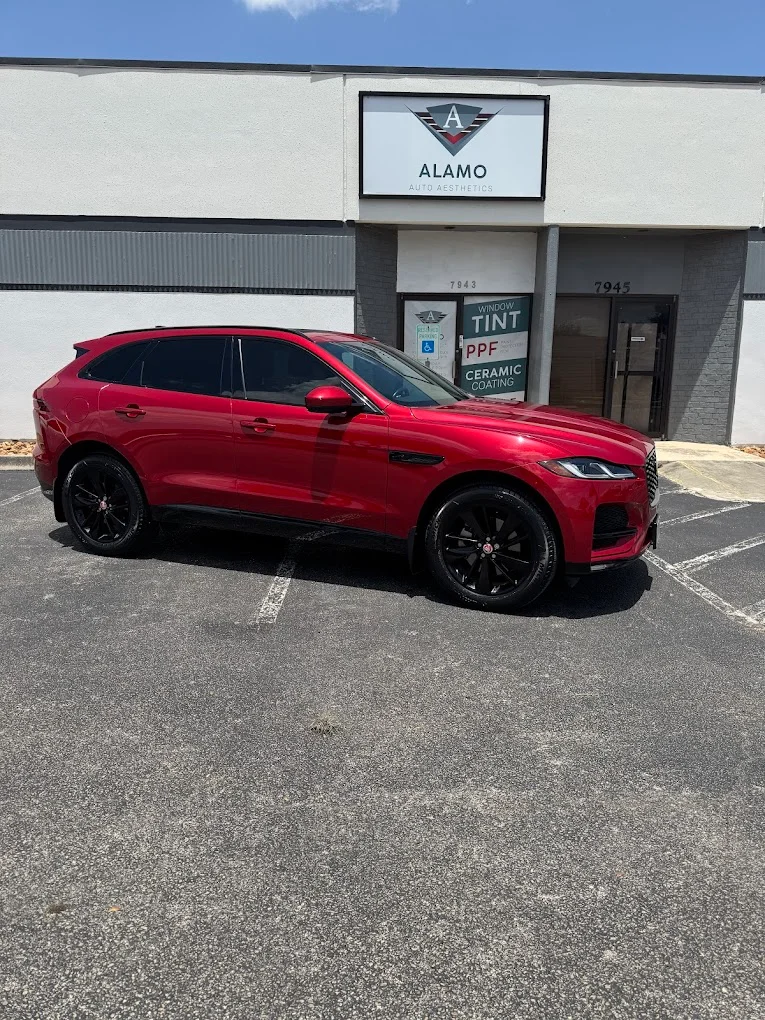
When selecting a window tint shop in Texas, choosing an experienced and legally compliant facility protects you from costly tickets and re-installation expenses. Alamo Auto Aesthetics has established itself as the trusted authority for automotive window tinting in San Antonio, Alamo Heights, and the surrounding areas. Our modern, climate-controlled studio is engineered specifically to provide clinical cleanliness during every installation.
Unlike roadside tint shops that install illegal \"blackout\" films without testing factory glass or applying DPS compliance labels, we prioritize your long-term legal security and driving safety. We exclusively install high-performance ceramic and carbon films from world-leading manufacturers, backed by nationwide lifetime transferable warranties.
Key reasons vehicle owners choose Alamo Auto Aesthetics:
- ✓Certified master tint technicians with extensive knowledge of Texas Department of Public Safety regulations
- ✓Calibrated digital light meters used on every vehicle to guarantee 100% legal VLT compliance
- ✓Official Texas DPS compliance decals installed on all applicable vehicle glass
- ✓Clean, climate-controlled installation facility engineered for dust-free applications
We believe in providing transparent guidance, helping you choose the darkest legal shade that maximizes heat and UV defense while keeping you completely confident on Texas roads. When you choose Alamo Auto Aesthetics, you invest in masterful workmanship, legal compliance, and lasting comfort.
Navigating Annual Texas State Inspections and Tint Meter Testing
Operating a motor vehicle with illegal window tint in Texas carries real consequences that can disrupt your daily routine. Every motor vehicle registered in Texas must undergo an annual safety inspection, during which certified inspection stations test window tint using state-approved digital tint meters. If your front side windows meter below the legal 25% VLT threshold, your vehicle will automatically fail inspection.
In addition to failed inspections, driving with illegal tint makes your vehicle a target for traffic stops by local police departments, county sheriffs, and the Texas Highway Patrol. Officers carry handheld tint meters to verify compliance during routine stops.
Consequences of non-compliant window tint in Texas:
- ✓Failed State Vehicle Inspection: Vehicles with tint darker than 25% VLT on front side windows will not receive a passing inspection certificate.
- ✓Class C Misdemeanor Citations: Fines for illegal window tint in Texas typically range from $150 to $250+ per violation.
- ✓Mandatory Removal Orders: Judges frequently require vehicle owners to remove non-compliant film and provide proof of removal to dismiss citations.
- ✓Double Expense: Paying to remove illegal film and replace it with compliant tint doubles your total tint expenditure.
By choosing Alamo Auto Aesthetics, you avoid these unnecessary hassles and expenses entirely. Our precision metering, premium film selection, and official DPS compliance decals ensure your vehicle passes state inspections smoothly and remains completely street legal across Texas.
Contact Us Today
Have questions or need emergency service? Reach out to our dedicated team anytime.
Alamo Auto Aesthetics
Fast, dependable support and honest pricing across our service area.
Frequently Asked Questions
Find clear, helpful answers to common questions regarding our process, pricing, equipment, and satisfaction guarantee.
How dark can my window tint legally be in Texas?
What is the difference between ceramic tint and regular dyed tint?
How long does window tint take to cure in San Antonio's climate?
Will window tinting interfere with my GPS, toll tag, or phone signals?
Does window tinting help improve fuel economy or EV range?
Related Articles
How Much Does Paint Protection Film Cost in Texas? (2026 Price Guide)
How Much Does Paint Protection Film Cost in Texas? (2026 Price Guide)
Read Article →Window Tinting Cost in Texas: A 2026 Pricing Guide
Window Tinting Cost in Texas: 2026 Pricing Guide | Alamo Auto Aesthetics
Read Article →How Much Does Ceramic Coating Cost in Texas?
How Much Does Ceramic Coating Cost in Texas? | 2026 Pricing Guide
Read Article →